
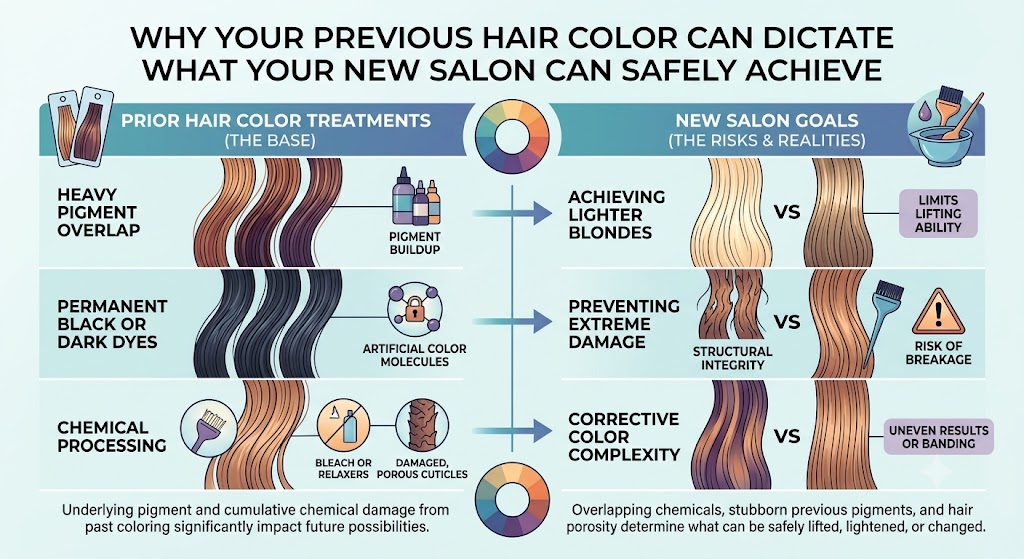
Your Hair History Matters More Than You Think
When you walk into a salon with a new hair color in mind, it can be tempting to think that a reference photo is enough to explain what you want. However, the condition and history of your hair can have a major influence on what is realistically possible during a color appointment. Previous color treatments leave behind pigments, chemical effects, and changes to the hair structure that can continue to affect future services. This means that the color you had several months ago can still influence the result your stylist can safely create today. At MeTime Salons, we believe understanding this history is an important part of developing a responsible and personalized color plan. A professional color consultation considers both your desired result and the current condition of your hair before deciding how far a transformation should go.
Artificial Color Does Not Always Behave Like Natural Hair
One of the most important factors in any color transformation is whether your existing color is natural or artificial. Natural hair pigment can generally be lightened through controlled professional processes, although the underlying warmth revealed during lightening still needs to be considered. Artificial color behaves differently because previously deposited pigments may remain inside the hair even when the visible shade appears to have faded. Applying a lighter permanent color over previously colored hair does not necessarily remove that artificial pigment. In many situations, additional corrective techniques may be necessary before a significantly lighter shade can be achieved. This is why a stylist needs to know what color products have been used on your hair before recommending a major change.
Box Dye Can Change the Color Plan
Previous home color applications can make a professional color transformation more complicated than expected. Box dyes can contain pigments that respond differently to professional lighteners and color removers, and the stylist may not always know exactly what ingredients or formulation were previously used. Even if the hair looks relatively healthy on the surface, multiple applications can create layers of artificial pigment throughout the lengths. These layers can reveal unexpected red, orange, yellow, or uneven tones when the hair is lightened. A stylist therefore needs to evaluate the existing color rather than assuming that the visible shade tells the entire story. Being honest about previous home coloring gives your salon professional the information needed to choose a safer and more predictable approach.
Dark Color Can Make Going Light More Difficult
Clients who have repeatedly colored their hair dark may need to be particularly patient when requesting a much lighter result. Dark artificial pigments can require substantial work to remove, and attempting to lift several levels in one appointment can place excessive stress on the hair. The process may also expose strong underlying warm pigments that need to be neutralized or managed during subsequent stages. In some cases, achieving the desired blonde or lighter brunette may require multiple appointments rather than one aggressive service. Your stylist may recommend gradually moving through intermediate shades so that the hair can be monitored between treatments. Taking this approach can help protect the integrity of the hair while still moving toward the overall color goal.
Previous Highlights Can Affect New Lightening
Highlights also become part of your hair’s chemical history and can influence what happens during a new appointment. Some sections may already have been lightened considerably, while other sections may contain natural or artificial pigment. When additional lightener is applied, previously lightened areas can process faster than darker sections. This can create uneven results and increase the possibility of overprocessing if the application is not carefully controlled. A professional stylist needs to distinguish between virgin hair, previously colored hair, and previously lightened hair before deciding where and how to apply a new service. Understanding those differences allows the color plan to be adjusted according to the condition and history of each section.
Your Hair May Have Different Color Histories
Many people do not realize that their hair can contain several different chemical histories at the same time. The roots may be completely natural, the middle sections may contain permanent color, and the ends may have been highlighted, toned, or repeatedly colored. Each area can respond differently to the same chemical product because its pigment load and structural condition are not identical. Applying one formula uniformly across the entire head can therefore produce inconsistent results. Professional color work often requires section-specific decisions based on what has previously been done to the hair. This is one reason why an experienced consultation can be just as important as the actual color application.
Hair Condition Sets the Safety Limit
Your desired shade is only one part of the equation because your hair’s condition determines how much chemical processing it can reasonably tolerate. Hair that has already experienced repeated bleaching, coloring, heat styling, or other chemical services may have reduced strength and elasticity. Further processing can potentially increase dryness, breakage, porosity, and uneven color absorption. A responsible stylist will assess the hair before deciding whether the requested transformation should happen immediately. Sometimes the safest recommendation is to improve the condition first and postpone a major color change until the hair is stronger. Protecting the integrity of the hair should remain a priority even when the desired result is ambitious.
Why Color Removal Is Not the Same as Bleaching
Color correction often involves an important distinction between removing artificial pigment and lightening the natural hair underneath it. A color remover may be used in certain situations to reduce artificial pigment, while lightener can be used when greater levels of lift are required. These processes are not interchangeable, and choosing the wrong approach can create unnecessary stress or an unpredictable result. The appropriate technique depends on factors such as the existing shade, the type of color previously used, the desired result, and the condition of the hair. Professional assessment is therefore essential before deciding how to approach a significant color correction. What looks like a simple change from one shade to another can actually involve several technical considerations.
Warm Tones Are Part of the Lightening Process
When darker hair is lightened, underlying warm pigments are often revealed as the existing color becomes lighter. Depending on the starting level, these tones can range from red and orange to yellow and pale yellow. This is a normal part of the lightening process rather than necessarily a sign that something has gone wrong. The stylist then needs to determine whether those underlying tones should be neutralized, incorporated into the desired result, or reduced through further controlled processing. Previous artificial color can make this process less predictable because it may create different undertones in different sections. Understanding the science behind underlying pigment helps explain why achieving a particular cool blonde or neutral shade may require more than simply applying a lighter color.
Previous Treatments Can Influence Porosity
Hair porosity describes how readily the hair absorbs and releases moisture and chemical products, and previous treatments can influence this characteristic. Previously lightened or chemically processed areas may absorb color differently from relatively untreated sections. This can cause certain parts of the hair to become darker, brighter, duller, or warmer than expected if the formulation is not carefully selected. Porosity can also affect how long a toner or other color product remains visible. A stylist may therefore adjust formulas, processing times, or application techniques according to the condition of different sections. This level of customization can make a significant difference when working with hair that has a complicated color history.
Why Your Inspiration Photo May Not Be Immediately Achievable
Reference photographs are extremely useful because they help communicate the shade, depth, tone, and overall style you want. However, the hair in a photograph may have started from a completely different color and condition than yours. Lighting, camera settings, styling, filters, and professional finishing can also change how a color appears in an image. If your starting point contains several layers of previous artificial color, achieving the exact reference shade in one appointment may not be technically realistic. A skilled stylist can explain what aspects of the reference can be approached immediately and what may require a longer process. This allows the final plan to focus on achieving a beautiful result while respecting the limitations of your current hair.
The Importance of an Honest Color Consultation
A detailed consultation gives your stylist the opportunity to understand everything that has happened to your hair before planning the next service. It is helpful to mention previous permanent color, semi-permanent color, direct dyes, highlights, bleach, toners, chemical treatments, and significant home coloring. Even products used months or years ago can sometimes be relevant when the previously treated hair has not been completely cut away. Your stylist may also examine the hair’s texture, elasticity, porosity, existing pigment, and overall condition during the consultation. This information helps determine whether your target shade is immediately achievable or whether a gradual approach would be more appropriate. At MeTime Salons, we use the consultation process to create a color strategy that balances your expectations with the practical needs of your hair.
A Gradual Transformation Can Produce Better Results
There is nothing wrong with taking several appointments to reach a major color goal when doing so provides a better path for the hair. Gradual lightening can allow the stylist to monitor how the hair responds at each stage while reducing the need for excessive processing in a single appointment. It can also provide opportunities to refine the tone as the underlying pigment becomes clearer. Between appointments, proper home care can help maintain the condition and appearance of the hair. Although a multi-stage transformation may take longer, it can ultimately provide a more controlled route toward the desired shade. Patience can therefore be an important part of achieving a sophisticated color transformation without unnecessarily compromising hair integrity.
Communication Helps Your Stylist Protect Your Hair
The more accurately you describe your previous color history, the better your stylist can assess the situation. It can be easy to forget an old color appointment when several months have passed, particularly if the treated sections have grown out or faded significantly. However, previously processed lengths can still react differently during a new chemical service. Telling your stylist about previous treatments allows them to anticipate potential challenges instead of discovering them halfway through the appointment. It also creates an opportunity to discuss realistic alternatives if the original goal is not suitable for the current condition of the hair. Clear communication ultimately helps you and your stylist work toward the same result.
Your Best Color Result Starts With What You Already Have
A successful color transformation is not simply about choosing a beautiful shade from a chart or photograph. It involves understanding the starting level, existing artificial pigment, previous chemical services, hair condition, porosity, and desired end result. Your previous color can determine how much lift is possible, which tones may appear during processing, and whether the transformation should happen in one appointment or several. By recognizing these factors before treatment begins, you can approach your next salon visit with more realistic expectations and greater confidence. Our approach at MeTime Salons is centered on creating color results that work with your hair rather than ignoring its history. The most successful transformation is one that delivers a beautiful color while preserving the strength, manageability, and overall quality of your hair.